Home › Test Catalogue › Toxicology
Urine Drug Testing
Screen, then confirm.
Presumptive immunoassay screening and definitive LC-MS/MS confirmation, performed in Denver. Every specimen receives pH, specific gravity, and creatinine validity testing. Laboratory Director: Wenbing Chen, Ph.D., NRCC (Toxicological Chemistry).
Presumptive Testing
Urine Drug Screening (Presumptive)
A screen tells you where to look. It does not tell you what you found.
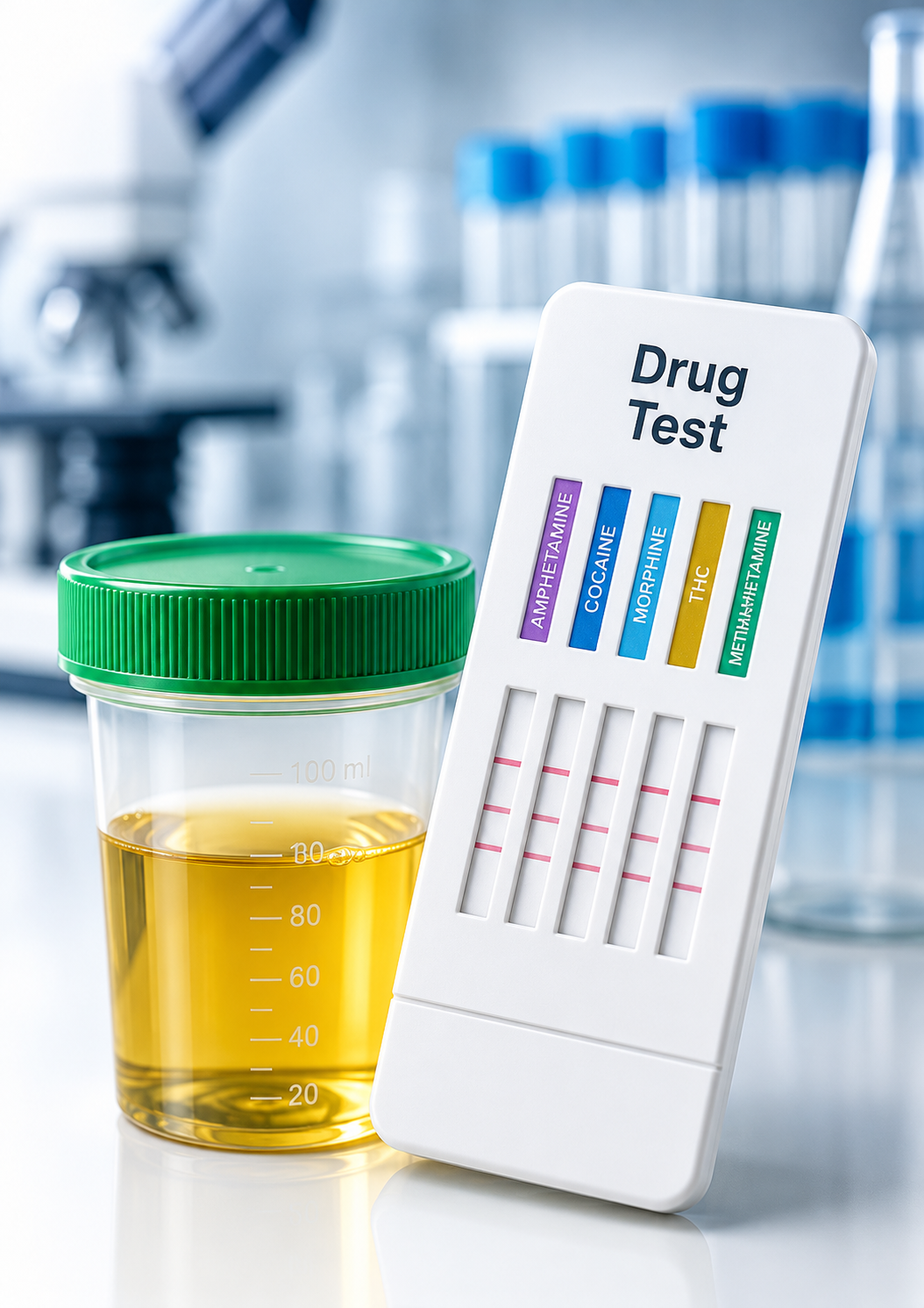
Presumptive urine drug testing is an immunoassay-based first pass across the drug classes that matter most in clinical practice: amphetamines, barbiturates, benzodiazepines, buprenorphine, cocaine, fentanyl, methadone, opiates, oxycodone, and THC. It answers a screening question quickly and inexpensively — is a substance from this class plausibly present, or plausibly absent. Every specimen also receives validity testing: pH, specific gravity, and urine creatinine, the three measures that expose dilution and adulteration before an unreliable result reaches a treatment decision. Understand precisely what a presumptive result is and is not. A positive screen is a signal, not a finding. Immunoassays are class-reactive and cross-reactive; they cannot distinguish oxycodone from hydrocodone, cannot separate a prescribed medication from an illicit analogue, and produce false positives. A negative screen does not exclude use, particularly for synthetic opioids and novel compounds present below the cutoff. Any presumptive positive that will inform a clinical, employment, or legal decision must be confirmed by definitive testing before it is acted on.
Definitive Testing
Urine Drug Confirmation — LC-MS/MS (Definitive)
Definitive testing names the molecule. Screening only names the neighborhood.
Liquid chromatography–tandem mass spectrometry identifies and quantifies the specific parent drug and its metabolites, resolving what an immunoassay cannot. Our definitive panel covers stimulants including amphetamine, methamphetamine, MDA/MDMA, methylphenidate, and cocaine as benzoylecgonine; a full benzodiazepine profile with the metabolites that reveal actual dosing, such as alpha-hydroxy-alprazolam and 7-aminoclonazepam; opioids from 6-monoacetylmorphine and morphine through hydrocodone, oxycodone, fentanyl and norfentanyl, methadone and EDDP, tramadol, tapentadol, buprenorphine, and isotonitazene; antidepressants; barbiturates; muscle relaxants and carbamates; cannabinoids including THC-COOH and synthetic cannabinoid metabolites; and alcohol and nicotine biomarkers — ethyl glucuronide, ethyl sulfate, and cotinine. The parent-to-metabolite ratio is what makes this clinically useful. It distinguishes the patient taking a prescribed medication as directed from one who added the drug to the specimen cup, and it separates hydrocodone taken as prescribed from hydromorphone taken from elsewhere. Order confirmation whenever a presumptive result will inform a prescribing, employment, or legal decision, and whenever a screen contradicts what the patient has told you. An immunoassay can be argued with. A mass spectrum cannot.